How Much Gravel Do I Need for a Driveway?
Estimate driveway gravel from length, width, and depth—then convert volume to cubic yards and approximate weight using material density.
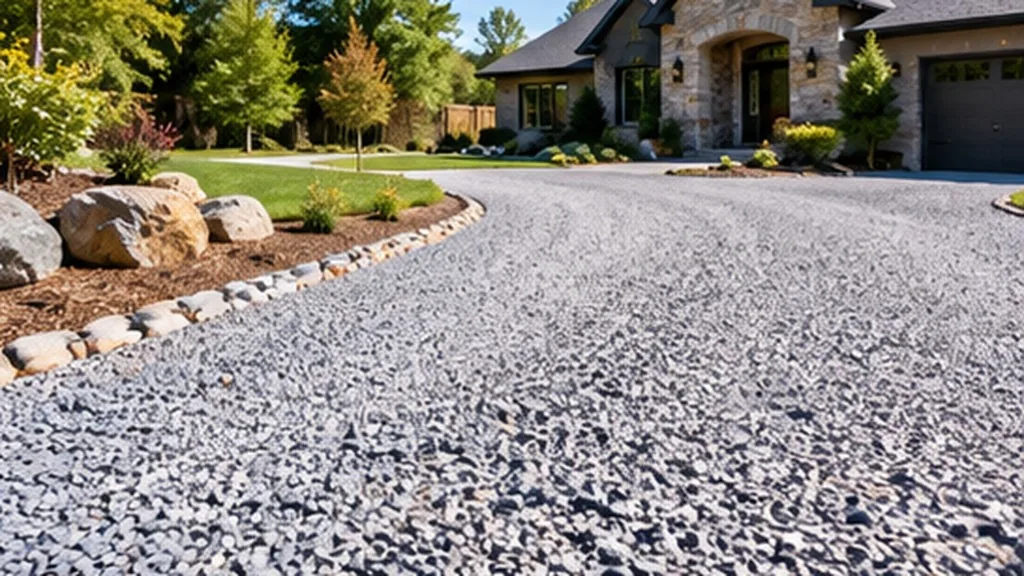
What a driveway gravel estimate includes
A planning estimate for driveway gravel starts with geometry: the area of the drive and the thickness (depth) of the gravel layer. From volume you can convert to cubic yards for delivery and, with a density assumption, approximate weight in US short tons or metric tonnes.
Density varies with material type, moisture, and compaction. Treat weight figures as planning ranges and confirm with your supplier before ordering.
Driveway measurements
Measure the length and width of the rectangular area you will gravel. For irregular drives, split the shape into rectangles, estimate each, then add the volumes.
Area (ft²) = length (ft) × width (ft)
Gravel depth
Depth is a design and site decision. Residential driveway planning often uses several inches of compacted aggregate, sometimes in layers, but local soil, drainage, and intended loads matter. Use the depth from your plan or supplier recommendation—this guide does not prescribe structural thickness.
Convert inches to feet when working in cubic feet:
Depth (ft) = depth (in) ÷ 12
Volume formula
For a rectangular pad:
Volume (ft³) = length (ft) × width (ft) × depth (ft)
Or keep depth in inches:
Volume (ft³) = length × width × (depth_in ÷ 12)
Cubic feet to cubic yards
Bulk gravel in the U.S. is commonly ordered by the cubic yard:
Cubic yards = cubic feet ÷ 27
Allowances and planning quantities
Uneven subgrade, compaction, and spreading losses can increase the quantity you need. A planning allowance around 5–10% is common for simple rectangular areas. CostRafter defaults to 10% waste when you leave the field at its default:
Order volume ≈ geometric volume × (1 + waste% ÷ 100)
Gravel density and weight estimates
Weight ≈ volume × density. CostRafter’s crushed-stone default density is 1,600 kg/m³ (a planning default—not a lab measurement of your pile). Pea gravel and other materials use different defaults; you can also enter a custom density from your supplier.
Density changes with moisture and compaction. Wet gravel weighs more per cubic yard than dry gravel of the same rock. Compacted layers occupy less volume than loose dumped material.
US short tons versus metric tonnes
- 1 US short ton = 2,000 lb ≈ 907.18 kg
- 1 metric tonne = 1,000 kg
Suppliers may quote either. Convert carefully when comparing bids.
Material cost with user-provided pricing
If your quote is per cubic yard or per ton, multiply by the order quantity you calculated. Enter only real local prices—CostRafter does not invent market rates.
Worked examples (verified)
Example: 40 × 12 ft driveway at 4 in depth
Length 40 ft, width 12 ft, depth 4 in, material type crushed stone.
- Volume: 40 × 12 × (4 ÷ 12) = 160 ft³
- Cubic yards: 160 ÷ 27 ≈ 5.93 yd³
- With 10% allowance: ≈ 6.52 yd³
- Using the calculator’s crushed-stone density default, approximate order mass with 10% waste is about 8.79 US short tons (≈ 7.97 tonnes)
With 0% waste, geometric volume remains ≈ 5.93 yd³ and approximate mass is about 7.99 US short tons at the same density default.
These figures match CostRafter’s Gravel Calculator for the same rectangular area inputs.
Common measurement mistakes
- Measuring only the paved length but forgetting width flares or turnouts.
- Mixing inches and feet for depth without converting.
- Ordering by area alone and ignoring thickness.
- Assuming one density for every rock type and moisture condition.
- Confusing US short tons with metric tonnes on a delivery ticket.
Use the gravel calculator
Enter one or more areas, depth, material type or custom density, and optional waste in the Gravel Calculator to refine driveway planning quantities. Related landscaping resources live under the Landscaping topic.
Limitations and supplier verification
- Estimates geometric volume for rectangular areas; slopes and crowns need field judgment.
- Does not design base courses, geotextile, drainage, or load-bearing structure.
- Default densities are planning aids—confirm bulk density and delivery units with your quarry or yard.
- Compaction can change how much loose material is required to finish at a target depth.
- This is educational planning guidance, not engineering advice.